Biography of Antonin Dvorak
or Dvorak and the viola
Buy Viola in Music's Collection of
13 famous tunes
Read more
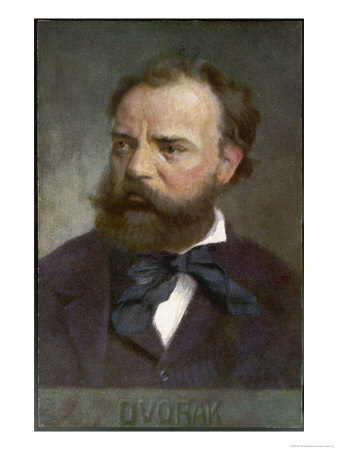
Antonin
Dvorak (Antonín Leopold Dvořák) is another of the many composers who played the viola.
In this short biography of Dvorak you'll read something about his life and relationship with the
viola and you'll see some examples of Dvorak's use of the viola in his
music.
Antonin
Dvorak
was a Czech composer, born in 1841 and
died in 1904. With Smetana, Fibich and Janáček he is regarded as one of
the great nationalist Czech composers of the 19th century.
Long
neglected and dismissed by the German-speaking musical world as a naive
Czech musician, he is now considered by both Czech and international
musicologists Smetana’s true heir. He earned worldwide admiration and
prestige for 19th-century Czech music with his symphonies, chamber
music, oratorios, songs and, to a lesser extent, his operas.
Antonin Dvorak's
best known works are The New
World Symphony, the Slavonic
Dances, the "American"
String Quartet and the Cello
Concerto in B minor.
He wrote in almost all music genres of the time: opera, oratorio,
cantata and mass; symphony, symphonic poem, concert
overture, serenade, suite, dance and march; concert piece and solo
concerto; chamber music ranging from the solo sonata to the sextet;
piano music; and secular choral works and songs.
While you read, listen to the first movement of the "American" quartet, with the viola starting the main theme
Early years and studies
Antonin Dvorak was born near
Prague from a
simple family, his father was a
butcher and innkeeper who played zither for is guests, and was the
first of eight children. He received his first musical education at
the age of six, at his village school, learning to sing and play violin
and soon playing at church in the village band, thanks to his progress.
After
six years he was sent to a bigger town where he continued
to study German, violin, piano, organ and continuo playing, and music
theory. Then in 1857 he went to the capital, Prague, to study at the
Organ School, where he also learned composition, the playing of
chorales
and improvising, while attending also the secondary school. And here we
find Antonin Dvorak
playing viola in
the music society orchestra, with programmes including music by
Beethoven, Mendelssohn, Schumann and Wagner, among the others.
Prague
has always had a very rich musical life and there Dvorak was also able
to hear Liszt conducting his woks and Schumann’s wife, Clara,
performing on the piano.
Initial professional experiences
In 1859 Dvořák as a viola player
joined a dance band that played in restaurants and for balls, remaining
there for some years. In 1862 a Czech opera house was built and the
band musicians came to form the original group of the theatre
orchestra, with Dvořák as principal
violist.
They performed German, French and mostly Italian operas by Rossini,
Donizetti, Bellini and Verdi. (They had built a Czech opera house but
they didn’t yet have a Czech opera to perform in there). In 1866 Smetana became the theatre
conductor, having won a competition for an
opera based on a Czech theme. From then, more and more local composers’
works were included in the programmes.
In addition to the theatre
orchestra, Dvorak played also with some other music societies, also in
some concerts conducted by Wagner. Dvorak also started composing
and teaching piano (one pupil of his, Anna, will become his
wife),
while
he remained in the theatre orchestra until 1871. During this period he
composed
one quintet, four quartets, two symphonies, a cello concerto,
a song cycle and the opera Alfred.
So far, you’ve seen that in his young, formative years, while he was studying composition, Antonin Dvorak went through a sort of “practical training” about instrumental music, playing viola in orchestras from the age of 16 to the age of 30. No doubt this was a better way to learn about other composers’ styles and how to write for instruments than by just reading books.
In composing, Dvorak aim was that no instrument should be playing a part that is merely filling in, every instrument speaks a language of its own.
His first first official opus work was a quintet with two violas.
Buy Dvorak's Viola sheet music
So if you fancy playing this wonderful music and others by Dvorak, you can find them here below, with other great pieces to play on the viola. Click on the links and pictures below.
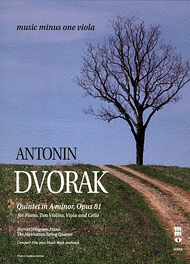
Instrumental Play-Along
Book/CD Packs
Some chamber music works with interesting viola parts:
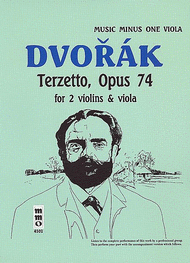
- Terzetto for two violins and viola
- String Quartet "American" where the viola opens the quartet with the main theme and has an important role throughout
|
All Dvorak's music - Printed
sheet music: Terzetto, quartets, quintets, sextet, orchestral excerpts
etc. |
 Dvorak's "American" quartet Full score and parts Downloadable sheet music: pdf, Mp3 and MIDI files |
First successes as a Czech composer
Before leaving the orchestra in 1871, he was composing an opera on a Czech libretto and soon his works started to get performed in Prague and be received well. In the following years Dvorak worked as a composer ad as a teacher and, to supply his income, he applied for a salary for artists granted by the Austrian state. This was granted for several years and on one of these occasions (1877) Brahms, who was in the jury, became so enthusiastic about Dvorak's Moravian duets (on folk songs) that recommended Dvorak to the Berlin music publisher Simrock.
After
this,
Dvorak started receiving requests for a big number of publications and
immediately
became a well-known composer, with his works performed internationally.
It is
at this time (1878) that the first set of Slavonic
Dances were composed, which are still some of his most
famous compositions.
Dvorak had started the study of Slavonic folklore and included it in his works; he composed also several song cycles on Czech poems and Czech operas.
Talking about Dvorak as a viola player, it's also
interesting to note that, although Dvorak was no longer playing viola
professionally in the orchestra, in 1878 he took part in the first
private performance of Smetana's
"From
my life" quartet, another important composition where the
viola has a leading role from the beginning.
At the same time Dvorak
also composed music for important public celebrations, a historical
grand opera for the inauguration of the Czech National Theatre.
Following the international fame achieved, Dvorak was invited to England
to conduct his own works. In 1884 he travelled to London and conducted
there his Stabat Mater, the Slavonic Dances and other works in
different
parts of the country. It was a great success and over the following
years Dvorak travelled to England eight more times and also received an
honorary degree by the university of Cambridge.
Antonin Dvorak composer had been getting more and more recognition for
his
works, at home and abroad. Having met and made friends with
Tchaikovsky, who had been in Prague as a conductor, Antonin Dvorak also
travelled on a concert tour to Moscow and St Petersburg.
Antonin Dvorak the teacher
Since young, Dvorak had been teaching piano privately, but in 1891 he accepted a post as a professor of composition and instrumentation at Prague Conservatory. His job here didn't last long, as the following year he was asked to become the artistic director and professor of composition at the National Conservatory of Music in New York, with a salary of $15,000.
This proposal came from Mrs Jeanette Thurber, the conservatory's
president, who chose him because of his reputation as a nationalistic
composer. Mrs Thurber wanted to create a national American style
of music. After some hesitation, Dvorak accepted and soon
started a tour of over 40 concerts as a conductor and pianist.
Antonin Dvorak arrived in America in October 1892 and appeared at
Carnegie Hall
conducting his own Te Deum, written to celebrate the 400th anniversary
of discovery of America by Columbus.
The "American" compositions
Wishing to find original music material, Dvorak asked to hear
a
black student sing to him Negro spirituals and plantation songs, as
well as see transcriptions of natives' melodies.
He thought that American music could be based on such elements. A few composition from this time have the "American" nickname, like the "American" quartet, the "American" symphony n.9 (also called "From the new world"), the "American" quintet.
After the first year,
Mrs Thurber was no
longer able to finance the conservatory, due to a financial crisis, and
payments were delayed.
Dvorak felt homesick and had difficulty in composing. Eventually in 1895 he decided to go back home.
Final years
Back in Prague, Dvorak spent some time resting, enjoying his family and
country. He completed some works started in the USA and began to teach
again at the conservatory, of which he become the director in 1901.
Antonin Dvorak's final works were mostly operas and he himself
explained that
he considered them very important for the nation, because large
portions of the society would hear them and often.
His last composition was the opera Armida; during the first performance
he didn't feel well and had to leave and after a few weeks died.
Dvorak viola concerto?
Some people asked me about this, the truth is that there are transcriptions for viola of the cello concerto and of the violin concerto. They are well worth trying, if you love these pieces.
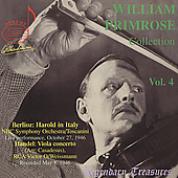
Here is Dvorak's Humoresque played on the viola by William Primrose.
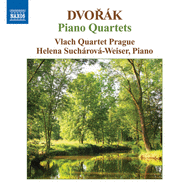
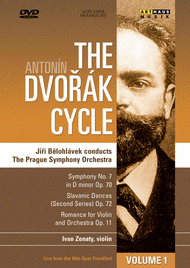
Buy Dvorak on recordings
CDs and DVDs

Tweets by @MonicaCuneViola


Play easily without pain &
nerves
Related pages
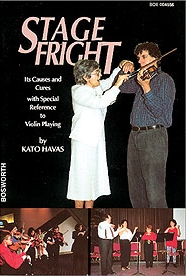 Read the book "Stage fright - Causes and cures", by Kato Havas, and play freely
Buy Viola in Music's Collection of 13 famous tunes (19 pages)
£7.99 and download them instantly
They are in their original keys, so you can play them in sessions with other instruments
Jesu, joy of man's desiring
Michael Turner’s waltz (2 versions)
The
greenwood tree
The south wind
Fanny Power
Ye banks and braes
Skye boat song
My Bonnie
My love is
like a red, red rose
Sportsman’s hornpipe
The road to Lisdoonvarna
Danny Boy (Londonderry Air)
Iron legs

Do you like
Viola in Music?
Support it by buying sheet music here

Download Sheet Music
|

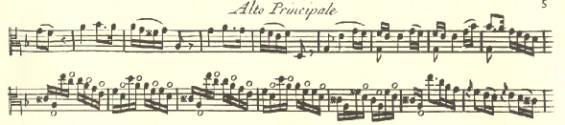
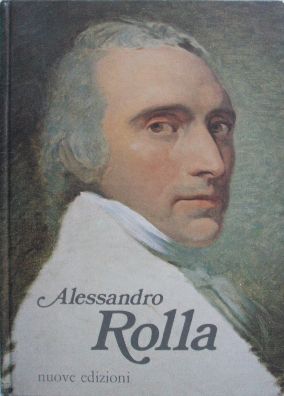
Alessandro Rolla
virtuoso viola player & composer, one of Paganini's teachers
Berlioz's Treatise on instrumentation and the viola
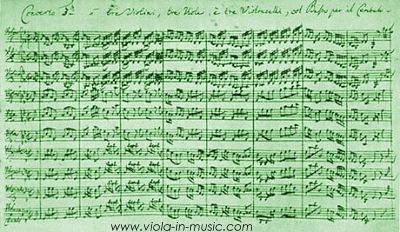
J.S. Bach's Brandenburg Concerto 3 for 3 violins, 3 violas, 3 cellos
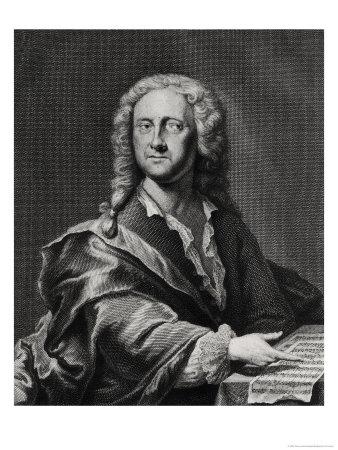 Portrait of Georg Philipp Telemann, composer of the first ever viola concerto
Georg Philipp Telemann's:
first ever viola concerto
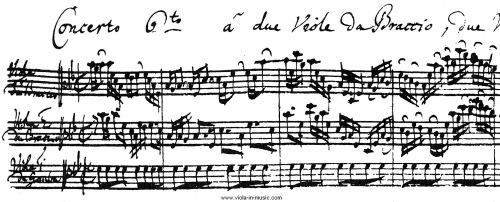
J.S. Bach's Brandenburg Concerto 6 for 2 violas and no violins!