Carl Stamitz
and the viola
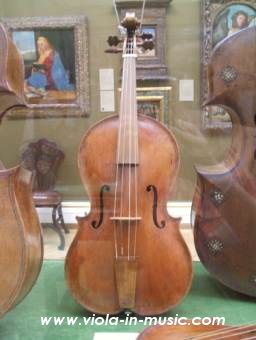
Carl Stamitz is not a very familiar name to most music lovers but it has a special role in relation to the viola. He was a composer famous in his time as a violin and, especially, viola and viola d’amore virtuoso.
Born in 1745, eleven years before Mozart, Carl Stamitz was the elder son of Johann, the founder of the so-called Mannheim school, and was the most famous member of the Stamitz family, a family of musicians particularly active in Mannheim (Germany) in the 18ᵗʰ century.
Carl joined the Mannheim orchestra when he was fifteen and there he became familiar with that style of orchestral playing and composing.
In 1770, Carl Stamitz travelled to Paris and lived there more or less stably. He gave concerts several times at the Concert Spirituel with his brother Anton, also violin and viola player. In the following years he travelled as a virtuoso, visiting the most important north European cities, including Frankfurt, Augsburg, where his first string quartets were published in 1774.
He seems to have been in London from 1777 to 1780, often collaborating with Johann Christian Bach, and where he published several of his works. In The Hague he gave 28 concerts as a solo viola player at the local court between 1782 and 1784. At one of such concerts in 1783 the young Beethoven took part.
After 1790 his fame declined, Stamitz’s final years were marked by much travel, distributions of his compositions and requests for stable employment, including petitions sent to Wales and Russia. In 1795 he was Kapellmeister and teacher at Jena University but died in poverty in 1801. At his death, his debt was so great that everything he owned was auctioned.
Carl Stamitz was one of the most prolific Mannheim orchestral composers, writing quartets, more than 50 symphonies, 60 concertos for several instruments and 38 symphonies concertante, a type of composition very fashionable in Mannheim and Paris.
As a person, my feeling is that he must have been quite original, having chosen the viola as his favourite instrument.
At that time, and indeed until the 20ᵗʰ century, with Lionel Tertis and William Primrose, the normal thing for a virtuoso to do was to play violin and maybe, sometimes, pick up the viola. Hector Berlioz tells that during his musical journeys in Europe, his Harold In Italy was always performed by the first violin of the orchestra, only once by one of the violas.
Carl Stamitz, instead, chose the viola as his virtuoso instrument. As a performer Carl’s style of playing must have been really impressive because there are several testimonies of his qualities, especially on viola and viola d’amore.
The music historian J.N. Forkel, who among other things wrote the first biography of Johann Sebastian Bach, in an article in 1782 gives a description of the viola which concludes with these words:
‘But would anyone who has heard Stamitz play the viola with a taste for majesty and tenderness, which appears to be peculiar only to him, not then declare himself for the viola, would he not then accept it among his favourite instruments’
Although Stamitz worked a lot as a viola virtuoso and published a great number of compositions during his life, few have survived and are performed now. The following are some
Interesting works for the viola
- Stamitz Viola concerto
- Sinfonia Concertante for violin, viola and orchestra
- Duos for violin and viola, 2 violas, viola and viola d’amore.

This page of Viola-in-music.com is recommended by the Encyclopaedia Britannica in their External Web sites section.

Go from Carl Stamitz to Home page
Tweets by @MonicaCuneViola


Play easily without pain &
nerves
Related pages
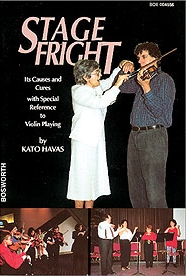 Read the book "Stage fright - Causes and cures", by Kato Havas, and play freely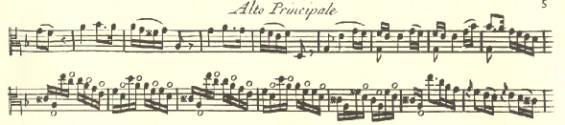
History of the viola
Lira-viola
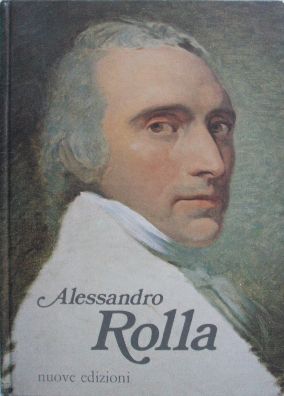
Alessandro Rolla
virtuoso viola player & composer, one of Paganini's teachers
Buy Viola in Music's Collection of 13 famous tunes (19 pages)
£7.99 and download them instantly
They are in their original keys, so you can play them in sessions with other instruments
Jesu, joy of man's desiring
Michael Turner’s waltz (2 versions)
The
greenwood tree
The south wind
Fanny Power
Ye banks and braes
Skye boat song
My Bonnie
My love is
like a red, red rose
Sportsman’s hornpipe
The road to Lisdoonvarna
Danny Boy (Londonderry Air)
Iron legs

Do you like
Viola in Music?
Support it by buying sheet music here

Download Sheet Music
|


New! Comments
Have your say about what you just read! Leave me a comment in the box below.