
Differences between
Violin and Viola

Buy Viola in Music's Collection of
13 famous tunes
Read more
Have you ever asked or wondered “what are the differences between violin and viola?” I bet you did, I have been asked a lot of times!
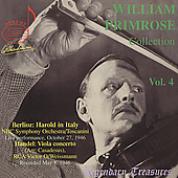
The famous viola player William Primrose, who like Lionel Tertis did a great job to make the viola well known and appreciated, said that he was asked this question so many times and always answered properly explaining all the differences between viola and violin, like the size, timbre, tone, tuning, range, etc. etc.
|
One time he felt a bit naughty, maybe a bit tired of having to explain all these things again and again, so he answered: “The difference between violin and viola is that the viola is a violin with a college education”. |
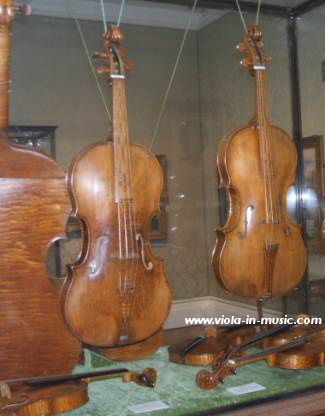
Here you’ll find the answers. It’s true, at first sight they look the
same, actually if you have only one of the two instruments you may not
see any difference at all.
There are not very big technical differences between violin and viola, but they are subtle and all together give the viola that distinctive, warmer tone and character.
Basically, the main differences are in:
(click on each link to go to the pages with all the details)
Viola size
The viola size is the first difference between violin and viola that
you can notice easily, I mean if you have the two instruments in front
of you to compare: the viola is bigger. The viola body length
generally goes from 40 cm (15 ¾ in) to 42/43 cm (16.5/17 in) and it is
larger accordingly, while the violin body is about 35 cm (13 ¾ in).
There are smaller (38 cm - 15 in) and even bigger instruments. There used to be more of the big ones in the 16th, 17th and early 18th century because viola music was very simple. Later in the course of the history of the viola they were cut down, to make them more comfortable to play.
Read more about Viola size...

Viola tuning
The viola tuning is the second important difference between violin and viola and it goes together with the different viola size, which also gives the viola its different (and nicer, in my opinion) timbre, tone quality.
Violin strings, from the highest to the lowest, are...
Read more about Viola tuning...
Viola strings
Viola and violin share three strings out of four.
From the highest to the lowest:
violin strings are E A D G
viola strings are the same A D G + C which is what makes the viola sound so specially gorgeous.
Viola strings are longer and thicker with greater tension.
Read more about Viola strings...
Viola clef
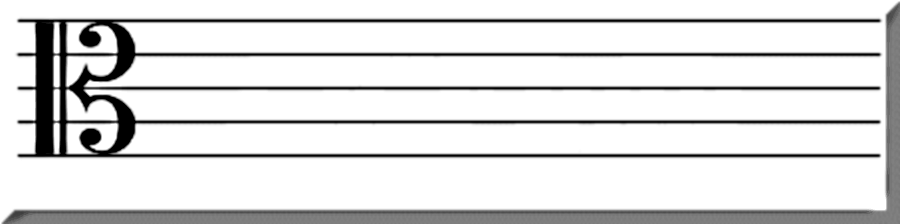
The viola clef is different from the very familiar treble
clef, used for violin and most other high pitched instruments and
voices, and from the bass clef, used for low pitched instruments and
voices.
Music for viola is written in what is called "C clef", which means that it indicates the position of the note C on the pentagram (five lines).
Read more about Viola clef...
Viola range
The viola range is over 3 octaves and a half,
nearly 4 octaves. This actually depends on the player's ability to play
the high notes.
It goes from the C below the middle C on the piano to nearly three octaves above the middle C on the piano. In Walton viola concerto, the highest note is an A three octaves above the middle C.
It's not that the viola cannot produce notes above there, it's quite difficult for the hand to get there because of the viola size.
The violin has a bigger range, although the very high notes, both on the violin and on the viola, can be produced as harmonics.
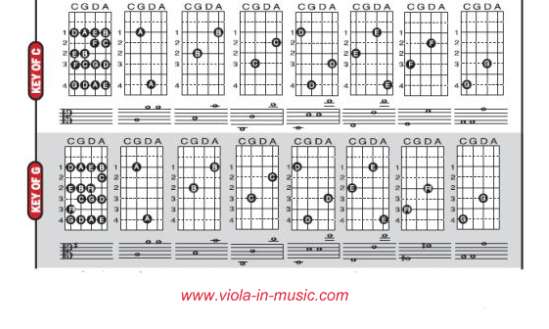
Viola fingering
Before we talk about viola fingering, what is fingering? Itis the
art of choosing, on any instrument, the best succession of fingers to
play notes.This is one of those differences between violin and viola
that only players can appreciate.
Yes, you can play notes almost anywhere on the viola and with any fingers but a good fingering is one that makes your life easier (that is, with no unnecessary up and down movements on the fingerboard or unnecessary awkward string crossings) and, more important, makes good music.
Read more about Viola fingering...
Differences between violin and viola teacher
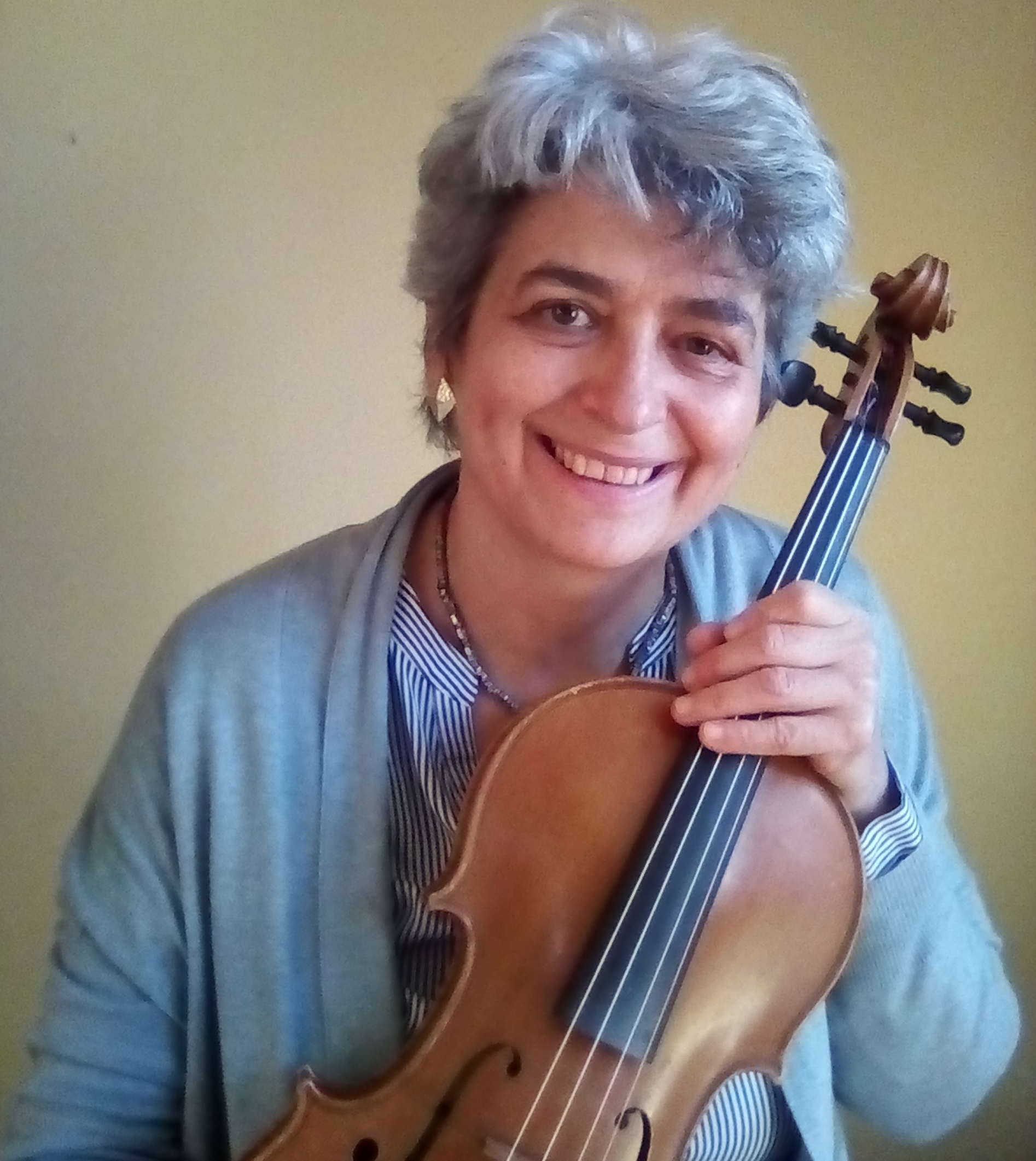
Try online viola lessons or online violin lessons with a viola expert, who? The author of this website!
and, would you believe it? other differences between violin and viola are in the players themselves!...
Hear the difference
between violin and viola
Anyway, if you really want to appreciate the differences between violin and viola, I’d recommend you to listen to a piece where they play together, like this short sample from the first movement of Mozart’s Sinfonia Concertante for violin, viola and orchestra in this video, here is part of it with the two instruments.
Also you can read this article on Mozart’s Sinfonia Concertante and even watch and listen to the whole work played by two famous violin players (father, David Oistrakh, and son) conducted by another famous violin player (Menuhin). By the way, out of these three, two were famous violin players who played the viola too.

Tweets by @MonicaCuneViola




Play easily without pain &
nerves
Related pages
 Read the book "Stage fright - Causes and cures", by Kato Havas, and play freely
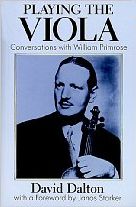
Best viola books: History, Tertis, Primrose, Menuhin, Kugel and more
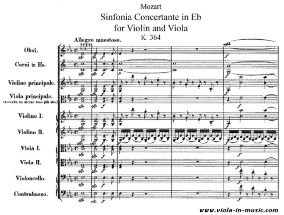
Mozart's
Sinfonia Concertante for violin, viola and orchestra

Maxim Vengerov
too plays the viola!
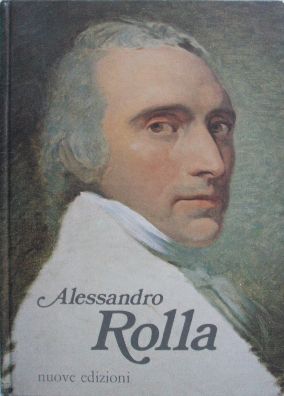
Alessandro Rolla
virtuoso viola player & composer, one of Paganini's teachers
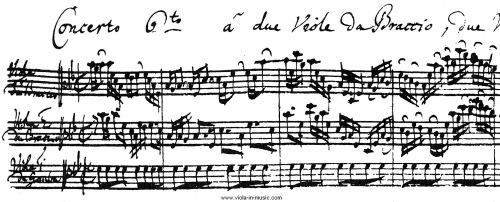
J.S. Bach's Brandenburg Concerto 6 for 2 violas and no violins!
Buy Viola in Music's Collection of 13 famous tunes (19 pages)
£7.99 and download them instantly
They are in their original keys, so you can play them in sessions with other instruments
Jesu, joy of man's desiring
Michael Turner’s waltz (2 versions)
The
greenwood tree
The south wind
Fanny Power
Ye banks and braes
Skye boat song
My Bonnie
My love is
like a red, red rose
Sportsman’s hornpipe
The road to Lisdoonvarna
Danny Boy (Londonderry Air)
Iron legs

Do you like
Viola in Music?
Support it by buying sheet music here

Download Sheet Music
|



New! Comments
Have your say about what you just read! Leave me a comment in the box below.