
What the scordatura is
and its relation to the viola

Buy Viola in Music's Collection of
13 famous tunes
Read more
The term "scordatura" is Italian and means "mistuning".
It was a "trick" used often, especially until the end of the 19th century, to improve the sound quality of a string instrument, to make it more resonating, and/or facilitate playing it.
It consists in tuning the strings in a way different from its usual tuning. There are many examples of the use of the scordatura: for example, Bach used it in his fifth cello suite (the A string is tuned down to G), in his first Brandenburg concerto, Vivaldi wrote concertos for "violino discordato", Mozart used it for the viola in his wonderful Sinfonia concertante for violin, viola and orchestra, where all the viola strings are tuned a semitone higher. Paganini used it in several of his violin works.
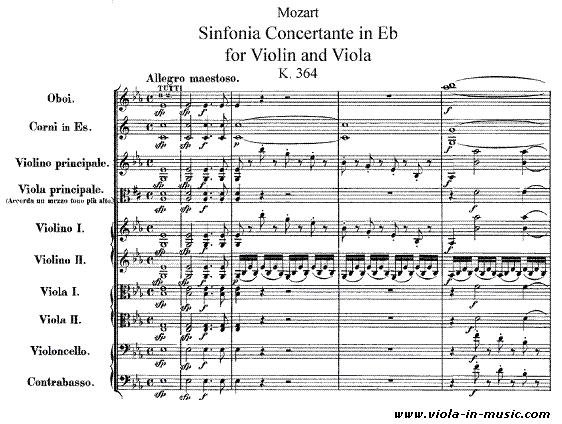
In the previous examples, the player reads one note but the sound effect is a different note. In Mozart's case, the viola part is written in D major, but with the instrument tuned a semitone higher, it all sounds in E flat major, like everybody else in that piece.
More examples include Vanhal's Concerto in F (written in E♭ for the viola), Carl Stamitz's Sonata in B♭ (written in A for the viola), and, according to one manuscript source, Stamitz's Symphonie concertante for violin and viola, which involves both solo instruments being tuned up a semitone.
More recently, Richard Strauss used an unusual tuning for the viola solo part in Don Quixote, to lower the bottom viola string to B and have an extra note, and many more composers used it.
The scordatura is also useful to understand which fingerings were intended for that piece (see Bach's fifth cello suite), or the composer's preference for an open string because, unless the player plays with a specific finger on a specific string, or uses an open string, the resulting notes sound wrong. In the 20th century, all these works composed with a scordatura in the composer's mind were transcribed for an instrument with a "normal" tuning. However, with the interest for Baroque or "authentic" performance practice, there has been a renewed interest for editions presenting the original version of a work. Now these works are usually offered with the two versions, so the player can choose which one to use.
It should be mentioned that the great viola player and pioneer Lionel Tertis in his time, at the beginning of the last century, already advocated the use of the scordatura for Mozart's Sinfonia concertante.
Go back from Scordatura to Glossary of music terminology


Tweets by @MonicaCuneViola



Play easily without pain &
nerves
Related pages
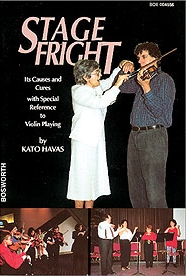 Read the book "Stage fright - Causes and cures", by Kato Havas, and play freely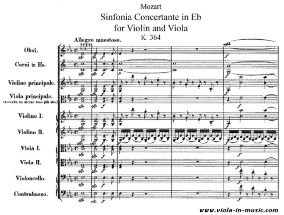
Mozart's
Sinfonia Concertante for violin, viola and orchestra
Buy Viola in Music's Collection of 13 famous tunes (19 pages)
£7.99 and download them instantly
They are in their original keys, so you can play them in sessions with other instruments
Jesu, joy of man's desiring
Michael Turner’s waltz (2 versions)
The
greenwood tree
The south wind
Fanny Power
Ye banks and braes
Skye boat song
My Bonnie
My love is
like a red, red rose
Sportsman’s hornpipe
The road to Lisdoonvarna
Danny Boy (Londonderry Air)
Iron legs

Do you like
Viola in Music?
Support it by buying sheet music here

Download Sheet Music
|



New! Comments
Have your say about what you just read! Leave me a comment in the box below.